

Failure is a Lesson
But are you willing to learn?

Hey friend
Welcome to 200 Word Tuesdays. Where we give you short, actionable ideas to implement in your project management. We promise that you haven’t heard these powerful ideas anywhere else.
Let’s get started.
Your failure is the lesson that you require to get to the next level in your life, your career, your relationships or your business.
This is a big realisation that we all need to have.
Sadly, some never do.
What that leads to is anger, resentment and lack of growth and improvement.
Ultimately, it leads to a lack of success.
Remember that our most profound lessons often come when we’re at our lowest points – when a project falls through, a relationship ends, or a business venture fails.
These moments, though painful, are precisely when we’re most receptive to learning because our usual defenses are down and we’re forced to confront reality honestly.
But that can only happen if we recognise what is happening.
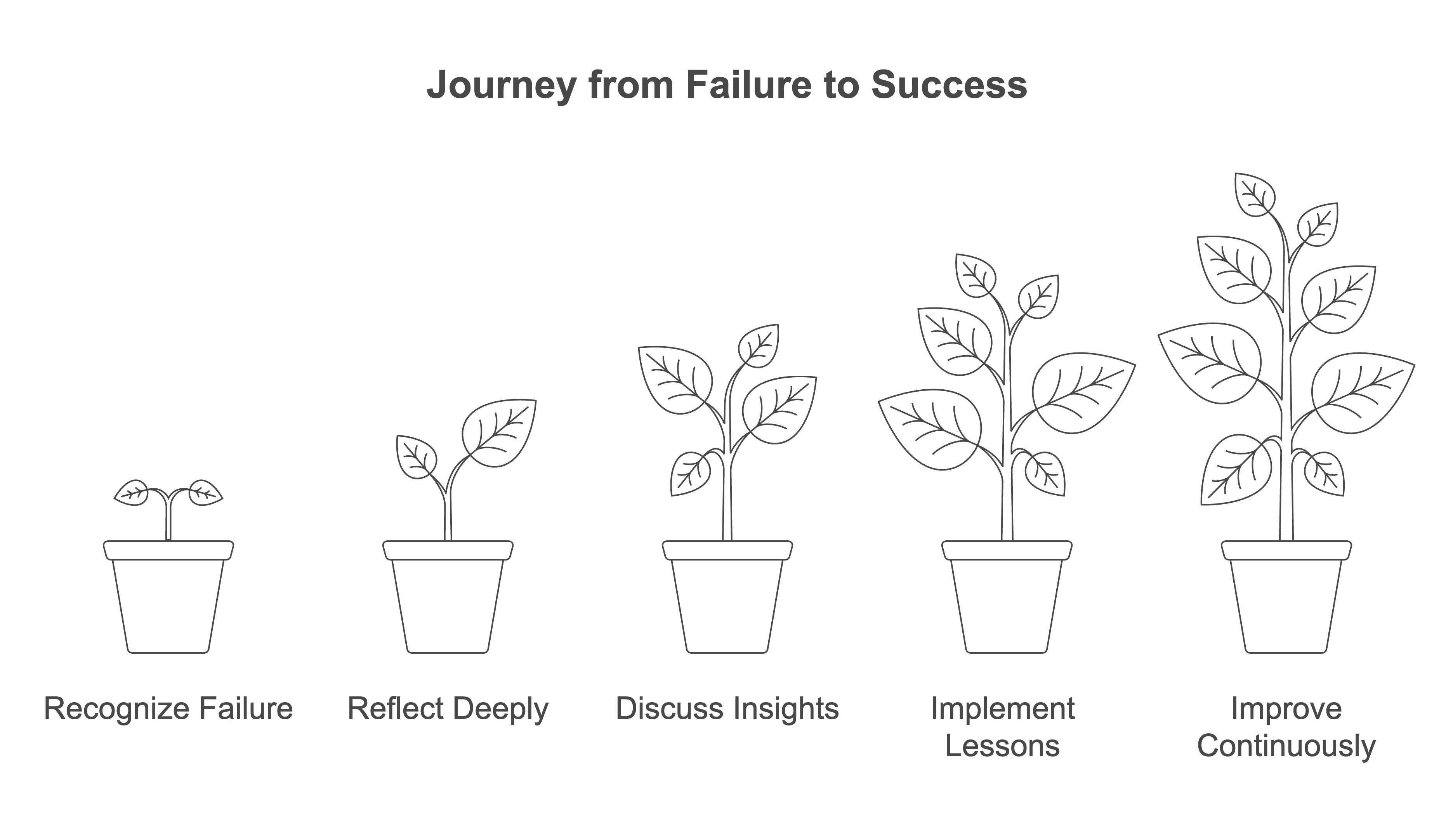
When facing failure, resist the urge to immediately move on or place blame. Instead, take time to reflect deeply.
Ask yourself: What assumptions led me here? What warning signs did I miss? What patterns can I identify? Where can I improve?
Turn these insights into concrete lessons by writing them down and discussing them with trusted mentors or colleagues.
Then, break down your learnings into actionable steps and integrate them into your daily routines or processes.
Try to fail forward – making new, more sophisticated mistakes rather than repeating old ones.
Most importantly, see each setback as evidence that you’re pushing your boundaries and taking worthwhile risks.
Success rarely follows a straight line, and every “failure” brings you closer to your goals if you approach it with the right mindset.
Reflect > Learn > Implement > Improve
All the best,
Courtney
The willingness to sit with failure long enough to actually learn from it is one of the hardest things to develop, and one of the most predictive behaviors in the data. Most people move on too fast, or spend the energy on blame rather than reflection, and end up carrying the same blind spot into the next situation.
The question "what assumptions led me here?" is, I think, the right one. Most failures aren't random, they're the logical outcome of something the leader believed that turned out to be wrong. Finding that belief is where the real learning lives.
Resilience isn't about bouncing back quickly. It's about bouncing forward smarter.
One of the reminders I've been sitting with lately is, "what got us to where we are won't get us to where we want to go." I'm realizing that many failures result from doing the same thing we've always done and expecting a different result, rather than learning from that and making the continous adjustments.